
 Randy Joe Sa'ah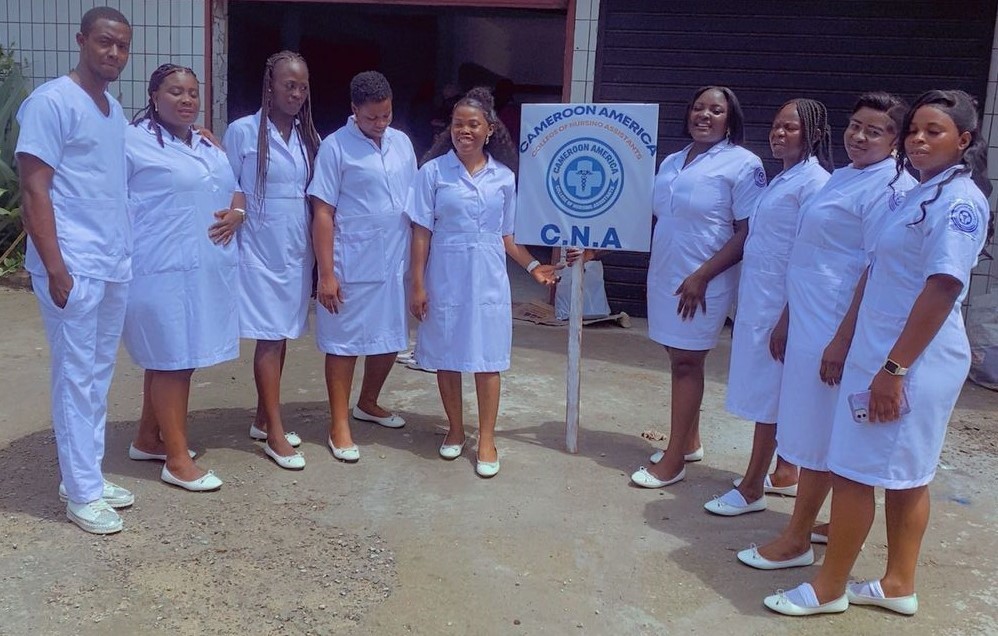
A groundbreaking initiative is set to redefine healthcare support in Cameroon, as a US-trained professional introduces a rigorous, internationally-aligned nursing assistant program in Limbe. The institution promises to elevate care standards and forge new career pathways, both locally and globally. MOLA and WANDONG are curious about this development: Cont’d on page 5
WANDONG: Mola, have you seen this news about Anita Enoh Takang and her new nursing assistant college in Limbe? It sounds really… intriguing. “US-Style Nursing Assistant Training to Cameroon”?
WANDONG: (Nods, a smiling) Intriguing, Mola, but more than that – I think it’s potentially a game-changer. I lived in the US for years, and let me tell you, Certified Nursing Assistants, or CNAs, are the backbone of their healthcare system. They’re invaluable.
Mola: So, it’s not just a fancy name? Because honestly, sometimes these “international standard” claims in Cameroon can be a bit… exaggerated.
WANDONG: No, no, this sounds legitimate. The article says she’s bringing the State-Approved Nurse Aide I Curriculum directly from North Carolina, USA. That’s a huge deal. It’s a very specific, structured program designed to prepare students for competency exams. It’s not just a generic “caregiver” course. We’re talking about modules on infection prevention, activities of daily living (ADLs), nutrition, body mechanics, even mental health and end-of-life care. These are specialized skills that go beyond what a family member, however well-meaning, might know.
Mola: ADLs… you mean things like helping patients with bathing, dressing, moving around? The tasks that often fall to nurses here, or even untrained family members, creating so much strain.
WANDONG: Precisely! And that’s where the critical value comes in. Anita is even calling on the government to hire these trained Nursing Assistants to help nurses with ADLs. Can you imagine the relief for our overworked nurses if they had properly trained support for these fundamental tasks? It frees them up to focus on more complex medical interventions. It’s not about replacing nurses; it’s about optimizing their roles and improving patient care quality from the ground up.
Mola: That’s a good point. Our nurses are truly stretched thin. But for these new nursing assistants, what’s the pathway after training? Is this just another certificate gathering dust?
WANDONG: That’s another key aspect I picked up on. Her college, the Cameroon America College of Nursing Assistants, is directly partnered with Jolie’s Hospital & Home Healthcare Services, which she also owns. So, there’s an immediate employment pathway right here in Cameroon, in hospitals and homecare settings. That’s a smart move to ensure graduates are actually employed.
Mola: Ah, the classic “problem of integration” after training. So, she’s thought of that. And what about the “international standards” claim beyond just the curriculum? Does it really open doors globally?
WANDONG: It certainly implies it. The article mentions it “facilitates the recruitment of graduates into nursing assistant positions across the United States.” That’s a huge pull factor for young Cameroonians seeking opportunities abroad. If they truly meet US competency standards, they become much more marketable. It’s a win-win: improved local care and exportable skills.
Mola: But hold on, I saw something in there about stripping certificates for misbehavior? That’s quite a strict policy, even after graduation.
WANDONG: (Chuckles) Yes, that caught my eye too! “If they misbehave after school, we immediately withdraw their certificates.” That’s a serious commitment to ethical standards and professional conduct. It’s not just about passing a course; it’s about embodying the values of compassion, patient safety, and ethics. It shows they’re serious about the reputation of their graduates and the quality of care they represent. It’s tough, but in a field dealing with vulnerable lives, maybe it’s necessary.
Mola: It is quite a bold stance. So, what’s the gist? Is this the solution to some of our health sector woes?
WANDONG: It’s a significant step, Mola. It addresses a critical gap in trained healthcare support personnel. By focusing on a skills-based approach and patient-nurse relationships, they’re filling a crucial need. And the timing couldn’t be better, with World Nursing Assistants Week just wrapping up. It highlighted their “champion” role, and now we have this institution training new champions right here.
Mola: And the practicalities? Classes starting soon, I hear?
WANDONG: Yes, June 20th! Recruitment for teaching positions is open, 10,000 FCFA to register. And the full program fee is 100,000 FCFA. For the potential career pathways and the quality of training, that sounds quite reasonable. I genuinely hope this initiative succeeds and becomes a model. It’s not just about a college; it’s about a cultural shift in how we view and support our frontline healthcare workers. It’s about dignifying a crucial role that often goes unrecognized. This could truly elevate our healthcare delivery, one compassionate, well-trained nursing assistant at a time.
Mola: Here’s hoping this “revolutionary shift” truly takes root and flourishes. It’s certainly a hopeful sign for our health sector.